Is Your Adelaide Roof Ready for Winter? What to Check Before the Cold Sets In
Right now, Adelaide’s weather is about as pleasant as it gets. Mild days, clear skies, no reason to think about what’s sitting above your head. Most homeowners aren’t.
But the roof doesn’t get a break between seasons. It’s been dealing with months of UV, summer heat pushing past 40 degrees, and the occasional storm that rolls through without much warning. By the time winter arrives, some of that wear has quietly added up – and the first sustained rain of the season has a way of finding exactly where.
That’s usually when the phone calls start.
Adelaide’s Winters & the Roofs
It’s not the dramatic stuff that causes most of the damage. Adelaide winters aren’t about cyclones or snowfall. They’re about consistent, prolonged rainfall – the kind that sits on your roof for days, works its way into small cracks, and shows up as a ceiling stain two weeks later when you’ve already forgotten about the rain.
A roof that seemed fine through summer can behave very differently once it’s being tested week after week. The difference is usually a (minor) existing issue.
What to Check Before Winter Arrives
You don’t need to get on the roof yourself – in fact, it’s better if you don’t. But there are things worth looking at from the ground and from inside the roof space if you have access.
Ridge capping and pointing
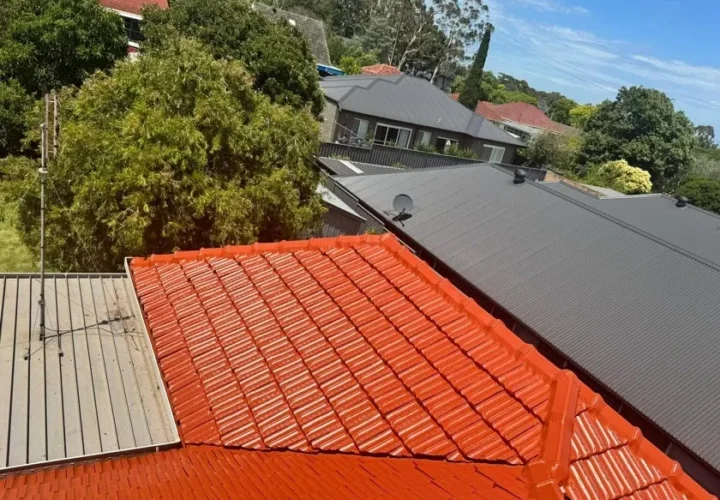
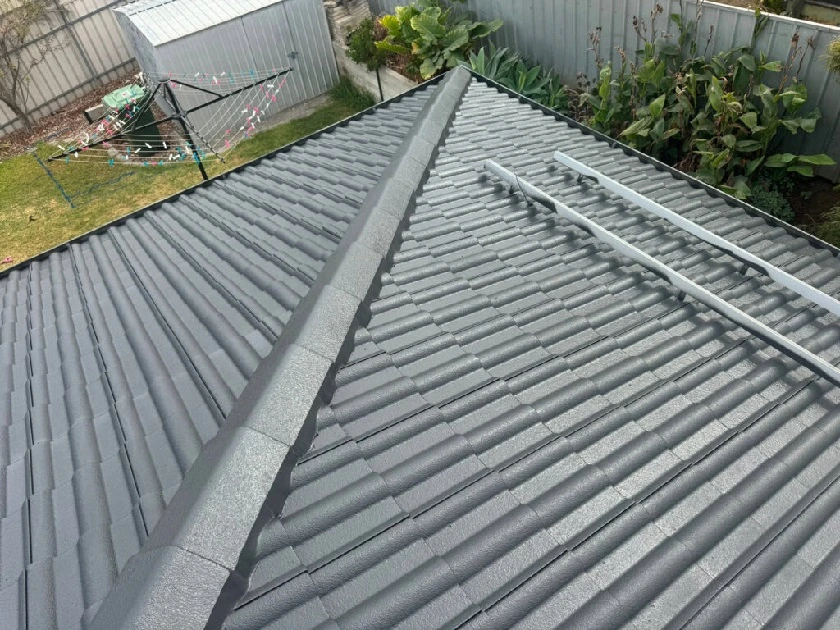
The mortar that holds your ridge and hip caps in place breaks down over time. When it cracks or loosens, water gets underneath. It’s one of the most common sources of leaks on Adelaide tile roofs and one of the more straight forward fixes – but only if it’s caught before winter.
Tile health
Look for anything visibly cracked, slipped out of position, or missing altogether. A single displaced tile is enough to let water in. On older roofs, it’s worth checking more carefully – concrete tiles from the 80s and 90s have had a long time to work through a few cycles of heat and cold.
Flashings
The metal strips around your skylights, vents, and roof valleys are a common weak point. Flashing can lift, corrode, or separate from the surface it’s sealed against. When it does, water follows the gap straight in.
Gutters and downpipes
Blocked gutters cause water to back up against the fascia and, in some cases, underneath the first row of tiles. A clean-out before winter isn’t glamorous, but it’s the kind of thing that prevents a genuinely annoying problem.
Inside the roof space
If you can safely access your ceiling cavity, look for water staining on the sarking or insulation, and check whether any daylight is visible through the roof. Either is worth acting on.
When to Act, When to Monitor
Not everything you find needs immediate work. A small amount of moss on tiles isn’t an emergency. But cracked pointing, lifted flashing, or any sign of moisture inside the roof space – those are worth addressing before the rain sets in, not after.
The general rule: if water can get in, it’ll find a way to. And winter is the ideal time.
Worth Getting Checked Before the Season Turns
If you’re not sure what condition your roof is actually in, a pre-winter inspection is the most straightforward way to find out. It doesn’t commit you to anything – it just gives you an accurate picture before the weather changes the equation.
At Dolphin Roofing, we’ve been assessing Adelaide roofs long enough to give you a straight answer on what needs attention and what can wait. If something does need work, we’ll tell you what and why before anything else.
Call us on (08) 8004 5801 for an honest assessment ahead of the season.